


On the second of March this year, an exclusive assembly will congregate in downtown Hollywood—in spite of the fires that flared across LA just a little more than a month prior. The guests inside will sprawl amidst flowing champagne, applauding themselves for finding empathy under silk and cashmere. Millions will tune in, because when one can’t have it, seeing it greatly facilitates the imagining of it. The allure here is detachment, and for the ones at home, the simple illusion of it. Those truly unfortunate are the ones hearing the music and camera flashes from the alleyways, seeing the warmth of advertisement lights without feeling it; it’s those who will tangibly experience what it means to have little and less in a world of obscene excess. Merry-making in times of crisis is not a sin, but to dance and not offer all to dance—to dance because others cannot—is.
The final years of the Weimar Republic were lavish ones. When the rise of German facism is discussed, it is often discussed within the context of pervasive misery, a festering discontent consistent and decades long; that is the simple answer, the digestible answer. What is harder to imagine are cities burning with life, art, culture—streets that could not have been more kinetic, people walking in the age of Pericles who simply allowed what happened from 1933 onwards to simply transpire. A candle burning so bright it did not sense the night guard snuffing out the others until it too happened to him. People who stood by and watched, people who stood by and turned away—all people who let it happen. In the end, no difference distinguishes those who were conscious and those who chose to be consciously ignorant.
On the 4th of April, 1967, exactly one year before his murder, the Rev. Dr. Martin Luther King Jr. addressed Stanford University. “This other America,” he said, “has a daily ugliness about it that constantly transforms the ebulliency of hope into the fatigue of despair. In this America millions of work-starved men walk the streets daily in search for jobs that do not exist. In this America millions of people find themselves living in rat-infested, vermin-filled slums. In this America people are poor by the millions. They find themselves perishing on a lonely island of poverty in the midst of a vast ocean of material prosperity.” Now almost 60 years hence, this exact division persists, only the glass separating has gotten clearer, not thinner.
The Western society is a post-conflict one. We are post-racial, post-feminist, and post-poverty. Society tells us that what we are living in now is already the fairest, most egalitarian iteration. Post-racial in the sense that legally (in the best case scenario) no barriers remain to impede the dreams of any man on any axis. Post-feminist in the sense that what can be changed has already been changed, and what’s left is the expectation that women must game the system (be a man) or accept the status quo. Post-poverty in the sense that poverty has ceased being an effect of distribution; in a world where politicians tell us we have solved poverty, poverty becomes the result of conscious personal volition. This is the myth that has relieved the burden of fault from the establishment; what blights that do occur are now less systematic than individual. If a Latino man is not hired for a job, then he must not have had the necessary qualifications, then another candidate must have just been more suitable. If many Latinos are not hired for a job, then the issue lies only with this one company, with one hiring manager; no social conspiracies persist to hinder anyone—there is no larger concern.
Being post-conflict is precisely what feeds our social myopia. We walk alongside victims of the institution daily, but we feel little responsibility for it; after all, victimhood today is a personal choice. There is no reason for any one of us to end up in that ditch unless we choose to jump into it, or we are too lazy to work hard enough to walk around it, or we choose to get high off of street heroin and fall into it. In essence, nothing that happens can happen without direct personal action—a post-conflict mindset that has pushed circumstance and ingrained institutional prejudices to the background. We act under the corrosive assumption that we live in an equal society when we truly live in a world irrevocably shaped by centuries of asymmetrical social organization—and that can only perpetuate our parasitic present.
There is a reason why the right is so afraid of critical race theory—why pseudo academics love to demonize the radical left. Acknowledging that systematic issues run deeper than equalization by legislation would mean an entire redefinition of what societal organization should be, and that introduces volatility to those who currently benefit from the system. Centrists are perhaps most guilty of this—the liberal attitude is a laissez-faire, post-conflict one. It is no secret that Hitler did not win through support, but rather tolerance. The popular justification behind many of the votes behind Trump was one that denounced his social politics but supported his economic direction. They tolerate what is being done to the others so that life perhaps may get better for them. The Weimar Germans surely thought the same.
All of this is reminiscent of the fraught death of Absolutism in the 18th century. The idea of enlightened despotism is a retrospective over-romanticization of the intentions of the elites and the motives behind the slow democratization. It is a passive ethos to believe those with power have the populist interest in mind; the fact of the matter is that neither Frederick the Great nor Catherine II were utilitarian thinkers ahead of their time, rather they were forced instate reforms under either incredible social pressure, or in doing what was best for their country. To think that the world could just easily rearrange itself through pure faith in our leaders is not only absurd but dangerous; it is a blank slate, it is approval, it is a protraction of the status quo.
The greatest asset to this goal is the apathy of the people. If we are gullible enough to be distracted by hollow rhetoric and award shows, then we are living in a sort of self-imposed autocracy; one where, to paraphrase Dostoevsky, we never even dream of escaping because we never knew we were in prison. Politics should never be a spectator sport, to observe a fire and tolerate it is the first step in allowing its growth. To be told that there is a fire and to refuse to turn from the rocks is no obstruction; to be told that there is a fire in your neighbors backyard, but to do nothing because it is not your fire is to invite it to your own.
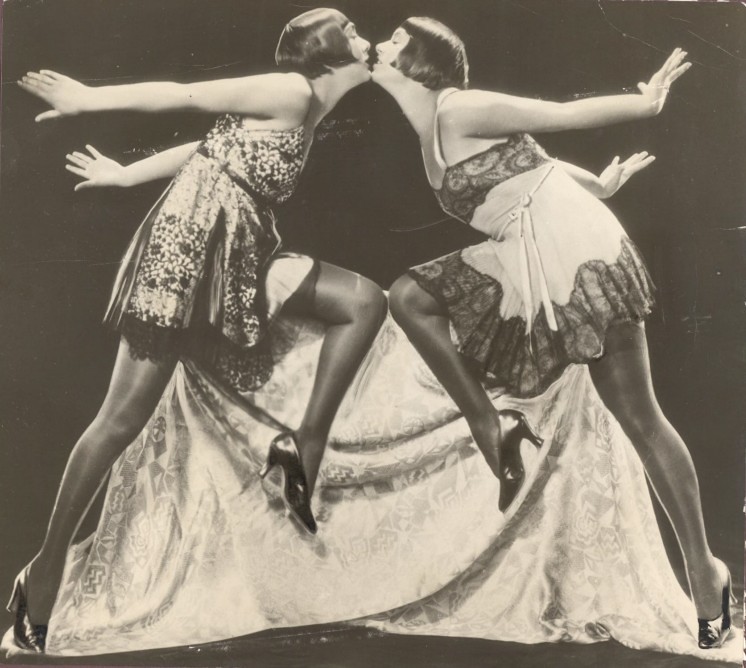
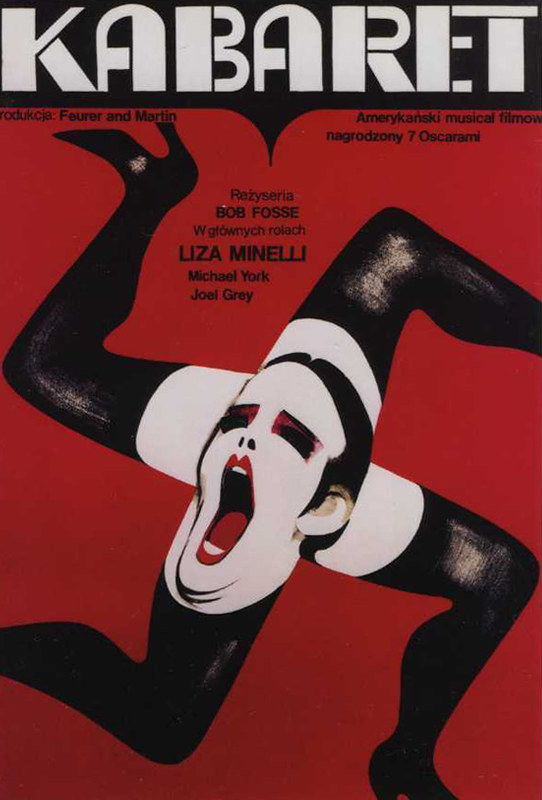
Cabaret is a musical adapted from a play adaptation of Anglo-American author—Christopher Isherwood’s—1939 novel, Goodbye to Berlin. In it, we see glimpses of the digetic future—our past; that dramatic irony grimly stitches together the entire production. There are characters we know will most likely be murdered by gas before they even know, creating not only a story of the final bursts of life before the encroaching end, but also a cautionary tale, one relates to our political apathy via culture. “No use permitting some prophet of doom // To wipe every smile away // Life is a cabaret, old chum // Come to the cabaret,” is the famous stanza from the eponymous track. Its message is a simple one; it never takes much for distraction, bread and circuses will be sufficient for us to lay down and allow the dismantling of democracy.
Apathy means inaction, and inaction is approval. The Austrians bureaucrats who abjured and surrendered sovereignty during Anschluss did exactly what Hitler wanted, and that makes them Nazis. The civil servants who filed paperwork for trains and transport (to concentration camps) did exactly what Hiter wanted, and that made them Nazis. The Germans who only voted for the Nazis because they were upset about the price of groceries did exactly what makes one a Nazi. The danger in authoritarian ideology is not fanaticism, but rather how facilitated it is for the population to simply fall in. There is ample evidence to suggest the resurgence of facism, but those with the privilege to not be in it refuse to look at that second America, and some of those without only look towards the first, hoping that affirmations and support of this post-conflict world can scoop them out. Perhaps now is the time to revive the idealism and belief in the inherent good that defined the 60s, because at least the hippies never once believed that the society they lived in was one already at its best. We have to drop the cynicism of our post-conflict lens, and once again truly believe in change, because not only is change possible, but change can be inevitable. Ultimately, we already know the consequences of the alternative, and we left with the conviction that it must never happen again (Nie Wieder); let us hold ourselves accountable to our words. Isherwood wrote “I am a camera with its shutters open, quite passive, not thinking;” we ought to remember that very ethos is precisely how the road to facism is paved.


